
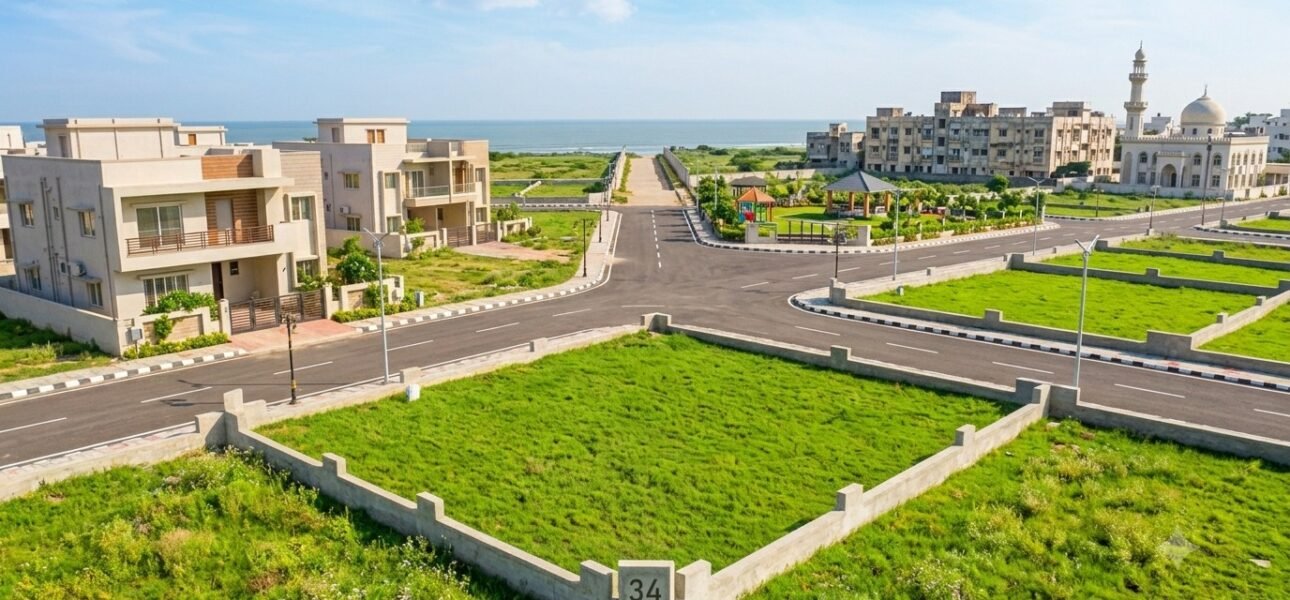
Buying a plot of land is not the same as picking a flat off a brochure. There is no ready structure to walk through, no sample kitchen to admire, and no immediate sense of “this feels right.” You are essentially buying a promise: the promise that this piece of earth, in this particular part of the city, will one day hold the home you have been imagining.
That is exactly why so many buyers get nervous halfway through the process. Land decisions are harder to reverse than flat decisions, and the mistakes are more expensive too. If you are currently looking at options for a residential plot for sale in Raipur, this guide walks you through the practical, no-nonsense steps that experienced buyers and agents actually follow, not just the generic checklist you find everywhere online.
Why Buying Land in Raipur Is Different From Buying a Flat
Raipur has grown fast over the past decade. Areas that used to be considered “outskirts” ten years ago, such as parts of Vidhan Sabha Road, Fafadih extensions, and pockets near the Ring Road, are now well within the city’s everyday commute. This kind of expansion is great news for land buyers, because it means today’s affordable plot could be tomorrow’s prime address.
But it also means the market moves in layers. A plot two streets apart from another can carry a very different price simply because of road width, drainage planning, or proximity to an approved layout boundary. Unlike an apartment, where the builder has already resolved most infrastructure questions, a plot puts a lot of that responsibility on you, or on the developer you choose to trust.
This is worth sitting with for a moment: when you buy a flat, you are buying a finished product. When you buy land, you are buying potential, and potential needs verification.
Step 1: Get Your Budget and Loan Eligibility Sorted First
Before you even start visiting sites, have an honest conversation with yourself about numbers. Plot loans work differently from home loans. Most banks offer only 70 to 75 percent of the plot value as a loan, compared to the 80 to 90 percent typically available for a built flat. That means your upfront cash requirement is higher.
A few practical points worth knowing:
- Plot loans usually come with a construction-linked clause. Many lenders expect you to begin construction within two to three years of purchase, or the loan may get converted to a regular personal loan at a higher interest rate.
- Registration charges, stamp duty, and legal fees in Chhattisgarh typically add another 6 to 8 percent on top of the plot price, so factor that in early.
- If you are buying purely as an investment and do not plan to build immediately, ask your lender specifically about their holding period rules before signing anything.
Getting this clarity first saves you from falling for a plot that looks perfect on paper but stretches your finances thin.
Step 2: Shortlist the Right Location for a Residential Plot for Sale in Raipur
Location decisions for land are less about “which area is trendy” and more about “which area will still make sense in ten years.” A few questions genuinely worth asking about any locality:
- Is there an approved master plan for this zone, or is development happening informally?
- How far is the nearest functioning school, hospital, and market, not the one that is “planned” but the one that exists today?
- What does the road connectivity look like during monsoon? Raipur’s rains can expose weak spots in newer, underdeveloped layouts.
- Is the area within municipal limits, or does it fall under panchayat jurisdiction, which can affect future property tax and civic services?
Buyers often gravitate toward whichever plots for sale in Raipur are being actively marketed at that moment, without checking whether the surrounding infrastructure can actually support a residential community. A little patience here goes a long way.
Step 3: Check the Legal Paperwork Before You Fall in Love With a Plot
This is the step most first-time buyers rush through, and it is the one that causes the most heartache later. Land title issues in and around growing cities are common, often because agricultural land gets converted for residential use without every document being airtight.
Here is what an experienced buyer, or their lawyer, will always insist on checking:
- Title deed and chain of ownership, tracing back at least 20 to 30 years where possible
- Diversion or land-use conversion certificate, confirming the land is legally cleared for residential purposes
- Encumbrance certificate, showing the land is free of loans, disputes, or pending litigation
- Mutation records, confirming the seller’s name is updated in revenue records
- Layout approval from the Raipur Development Authority or the relevant local body, ensuring the plot is part of a sanctioned residential layout, not an informal subdivision
None of this is glamorous work, but it is the difference between owning land cleanly and inheriting someone else’s legal headache.
Step 4: Understand RERA Approval and Why It Matters
Since RERA came into effect, developers selling plots as part of an organized project (typically anything above a certain size) are required to register the project with the Chhattisgarh Real Estate Regulatory Authority. This registration is not just a formality. It means the project’s land title, layout plan, and timelines have been submitted to a regulator, and the developer is legally accountable for what they promised.
Before finalizing anything, ask for the RERA registration number and verify it independently on the official CG-RERA portal. A genuine developer will never hesitate to share this. If a seller becomes vague or defensive when you ask, treat that as a signal to slow down, not speed up.
Step 5: Study the Layout, Plot Shape, and Facing
Once the legal side checks out, it is time to think practically about the plot itself. A few things experienced buyers pay close attention to:
- Shape matters more than size. A perfectly rectangular 1,500 sq ft plot is usually more usable and easier to sell later than an irregular 1,800 sq ft plot with awkward angles.
- Corner plots get more light and ventilation but also cost a premium and may have setback restrictions on two sides instead of one.
- Facing direction still influences resale value in this market, even among buyers who are not particularly traditional about it, simply because it affects how many prospective buyers will consider the plot later.
- Elevation relative to the road matters more than people expect. A plot sitting lower than the road level can face waterlogging issues, which become an expensive problem to fix after construction.
Comparing Plots for Sale in Raipur: A Quick Checklist
| Factor | What to Look For | Why It Matters |
| Legal title | Clear chain of ownership, no litigation | Prevents future disputes and resale issues |
| RERA status | Verified registration for organized projects | Adds regulatory accountability |
| Layout approval | Sanctioned by Raipur Development Authority | Confirms planned infrastructure and roads |
| Road width | Minimum 30 to 40 ft for residential layouts | Affects daily convenience and future value |
Drainage and elevation | Plot level at or above road level | Reduces risk of waterlogging |
Distance to essentials | Schools, hospitals, markets within reasonable range | Impacts livability and resale demand |
| Plot shape | Rectangular or near-rectangular | Easier to design and construct on |
| Price benchmarking | Compared against at least 3 to 4 nearby listings | Helps avoid overpaying |
Common Mistakes Buyers Make While Choosing a Plot
Even careful buyers slip up sometimes. The most frequent errors we see:
- Trusting verbal promises about “upcoming” infrastructure. A metro line, flyover, or IT park that is “coming soon” can genuinely take five to ten years, or never materialize at all. Price your decision based on what exists today.
- Skipping a physical site visit during the rainy season. A plot can look perfectly dry and pleasant in summer while sitting in a low-lying, waterlogged pocket during monsoon.
- Not verifying boundary markers with a surveyor. Verbal descriptions of boundaries from the seller are not enough. A proper measurement avoids future disputes with neighboring plot owners.
- Ignoring the resale angle entirely. Even if you plan to live there forever, life circumstances change. A plot with poor connectivity or unclear documentation will be hard to sell if your plans shift.
A Look at Ongoing Plotted Developments Around Raipur
It helps to look at real, currently active layouts in and around the city to understand how these evaluation steps play out in practice. Raipur’s plotted development activity right now is fairly spread out, with organized layouts coming up along the Raipur-Bilaspur Highway near Simga, around Kumhari, and in pockets closer to Vidhansabha Road near Nardaha.
Developers active in this segment, including Singhania Buildcon, typically structure these layouts with the same fundamentals covered above: sanctioned road widths, planned drainage, and phased development that allows infrastructure like water lines and street lighting to catch up before homes come up. Looking at a couple of live examples locally:
- Highway-facing layouts near Simga, such as Archee Icon City and Harshit Icon City, tend to attract buyers who value connectivity to the Raipur-Bilaspur corridor along with relatively lower entry prices compared to core city areas.
- Layouts near Nardaha and Vidhansabha Road, like Harshit Gold City, sit closer to established social infrastructure, which usually means a shorter runway before the area feels fully “lived in.”
- Developments around Kumhari, such as Platinum Green, reflect the steady spillover of residential demand from Raipur into neighboring industrial and semi-urban belts.
You do not need to buy from a specific developer to benefit from this kind of comparison. The point is simply that studying a few live, ongoing projects in different micro-markets, whoever is developing them, gives you a realistic sense of current pricing, layout standards, and how quickly an area is actually filling up, rather than relying on assumptions.
Final Thoughts
Choosing land is ultimately a slower, more deliberate process than choosing a flat, and that is not a bad thing. The extra weeks you spend verifying paperwork, walking the site at different times of day, and comparing layouts against each other are what protect you from decades of regret. Raipur’s growth story is real, and a well-chosen plot in the right pocket of the city can genuinely turn into one of your best long-term decisions, provided the fundamentals are checked properly before you sign anything.
Take your time, ask the uncomfortable questions, and lean on people who have done this before you. Land does not disappear overnight, but a bad decision can follow you for years.
Frequently Asked Questions
How much land area is considered ideal for a residential plot in Raipur?
Most families in Raipur comfortably build on plots ranging from 1,200 to 2,400 sq ft, depending on whether they plan a single-storey or multi-storey home. The right size really depends on your future construction plans, so it helps to sketch a rough floor plan before finalizing plot dimensions.
Is it safe to buy a residential plot for sale in Raipur that is not yet RERA registered?
It depends on the size and nature of the project. Smaller individual plot sales between private parties may not require RERA registration, but larger organized layouts typically do. Always ask the seller directly and verify any claimed registration number on the official portal before proceeding.
How long does the plot registration process usually take in Raipur?
Once documentation is in order, registration at the sub-registrar office can typically be completed within a few days to about two weeks, depending on document verification and appointment availability. Delays usually happen when paperwork is incomplete, which is another reason thorough due diligence upfront saves time later.
What is the difference between a freehold and leasehold plot?
A freehold plot gives you full, permanent ownership rights over the land, while a leasehold plot is held for a fixed lease period, often 30 to 99 years, after which rights may need renewal. Freehold plots are generally easier to sell, mortgage, and pass on, which is why most residential buyers actively look for freehold status when comparing plots for sale in Raipur.
Should I buy a plot in a developing area or an already established one?
Both have trade-offs. Established areas offer immediate infrastructure and easier resale but come at a higher price per square foot. Developing areas are more affordable and can appreciate significantly, but only if the growth is backed by real, verifiable infrastructure plans rather than speculation.